
 購物車
購物車 
-
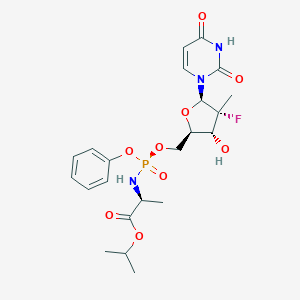
索非布韋
- names:
Sofosbuvir
- CAS號:
1190307-88-0
MDL Number: MFCD18782704 - MF(分子式): C22H29FN3O9P MW(分子量): 529.45
- EINECS: Reaxys Number:
- Pubchem ID:45375808 Brand:BIOFOUNT
索非布韋(Sofosbuvir,1190307-88-0)是一種核苷類似物,是丙型肝炎病毒(HCV)RNA聚合酶的有效抑制劑.索非布韋是一種前抑制劑,可代謝生成具有活性抗病毒的2'-脫氧-2'-α-氟-β-C-甲基尿苷-5'-單磷酸酯,在人肝微粒體中的體外研究表明,索非布韋是組織蛋白酶A(Cat A)和羧基酯酶1(CES1)的有效底物。 Sofosbuvir被CatA和CES1裂解,隨后的激活步驟包括通過組氨酸三聯體核苷酸結合蛋白1(HINT1)去除氨基酸,并通過尿苷單磷酸-胞苷單磷酸(UMP-CMP)激酶和核苷二磷酸(NDP)激酶進行磷酸化。
| 貨品編碼 | 規格 | 純度 | 價格 (¥) | 現價(¥) | 特價(¥) | 庫存描述 | 數量 | 總計 (¥) |
|---|---|---|---|---|---|---|---|---|
| YZM000547-1g | 1g | 99% | ¥ 2500.00 | ¥ 2500.00 | 1280 | 2-3days | ¥ 0.00 |
| 中文別名 | 索非布韋(cas:1190307-88-0),索氟布韋, 索菲布韋, 索氟布偉, 索弗布韋 |
| 英文別名 | Sofosbuvir(cas:1190307-88-0),,SOFOSBUVIR,PSI-7977,SOVALDI,PSI7977,PSI-7977 |
| CAS號 | 1190307-88-0 |
| Inchi | InChI=1S/C22H29FN3O9P/c1-13(2)33-19(29)14(3)25-36(31,35-15-8-6-5-7-9-15)32-12-16-18(28)22(4,23)20(34-16)26-11-10-17(27)24-21(26)30/h5-11,13-14,16,18,20,28H,12H2,1-4H3,(H,25,31)(H,24,27,30)/t14-,16+,18+,20+,22+,36-/m0/s1 |
| InchiKey | TTZHDVOVKQGIBA-IQWMDFIBSA-N |
| 分子式 Formula | C22H29FN3O9P |
| 分子量 Molecular Weight | 529.45 |
| 溶解度Solubility | 生物體外In Vitro:DMSO溶解度100 mg/mL(188.88 mM;Need ultrasonic)H2O : 25 mg/mL(47.22 mM;ultrasonic and warming and heat to 50°C) |
| 性狀 | 固體粉末,Power |
| 儲藏條件 Storage conditions | -20°C 3 years年 4°C 2 years年 / In solvent溶液中:-80°C 6 months月 -20°C 1 month月 |
Sofosbuvir(CAS:1190307-88-0)實驗注意事項:
1.實驗前需戴好防護眼鏡,穿戴防護服和口罩,佩戴手套,避免與皮膚接觸。
2.實驗過程中如遇到有毒或者刺激性物質及有害物質產生,必要時實驗操作需要手套箱內完成以免對實驗人員造成傷害
3.實驗后產生的廢棄物需分類存儲,并交于專業生物廢氣物處理公司處理,以免造成環境污染Experimental considerations:
1. Wear protective glasses, protective clothing and masks, gloves, and avoid contact with the skin during the experiment.
2. The waste generated after the experiment needs to be stored separately, and handed over to a professional biological waste gas treatment company to avoid environmental pollution.
Tag:索非布韋蒸汽壓,索非布韋合成,索非布韋標準,索非布韋應用,索非布韋合成,索非布韋沸點,索非布韋閃點,索非布韋用途,索非布韋溶解度,索非布韋價格,索非布韋作用,索非布韋結構式,索非布韋用處,索非布韋毒理性質
1.實驗前需戴好防護眼鏡,穿戴防護服和口罩,佩戴手套,避免與皮膚接觸。
2.實驗過程中如遇到有毒或者刺激性物質及有害物質產生,必要時實驗操作需要手套箱內完成以免對實驗人員造成傷害
3.實驗后產生的廢棄物需分類存儲,并交于專業生物廢氣物處理公司處理,以免造成環境污染Experimental considerations:
1. Wear protective glasses, protective clothing and masks, gloves, and avoid contact with the skin during the experiment.
2. The waste generated after the experiment needs to be stored separately, and handed over to a professional biological waste gas treatment company to avoid environmental pollution.
Tag:索非布韋蒸汽壓,索非布韋合成,索非布韋標準,索非布韋應用,索非布韋合成,索非布韋沸點,索非布韋閃點,索非布韋用途,索非布韋溶解度,索非布韋價格,索非布韋作用,索非布韋結構式,索非布韋用處,索非布韋毒理性質
| 產品說明 | 索非布韋(Sofosbuvir,1190307-88-0) (PSI-7977) 是HCV RNA復制的抑制劑,EC50是92 nM |
| Introduction | Sof osbuvir(索非布韋,1190307-88-0) (PSI977) is an HCV RNA replication inhibitor with anEC50of 92 nM. |
| Application1 | |
| Application2 | |
| Application3 |
Sof osbuvir Mechanism of Action
Sofosbuvir is nucleotide analog inhibitor, which specifically inhibits HCV NS5B (non-structural protein 5B) RNA-dependent RNA polymerase. Following intracellular metabolism to form the pharmacologically active uridine analog triphosphate (GS-461203), sofosbuvir incorporates into HCV RNA by the NS5B polymerase and acts as a chain terminator [synthesis, A7533]. More specifically, Sofosbuvir prevents HCV viral replication by binding to the two Mg2+ ions present in HCV NS5B polymerase's GDD active site motif and preventing further replication of HCV genetic material [A19638, FDA Label].
Sofosbuvir is a direct-acting antiviral agent (pan-genotypic polymerase inhibitor) against the hepatitis C virus. HCV RNA replication is mediated by a membrane-associated multiprotein replication complex. The HCV polymerase (NS5B protein) is an RNA-dependent RNA polymerase (RdRp). It is the essential initiating and catalytic subunit of this replication complex and is critical for the viral replication cycle. There is no human homolog for HCV NS5B RdRp. Sofosbuvir is a monophosphorylated pyrimidine nucleotide prodrug that undergoes intracellular metabolism to form the pharmacologically active uridine analog triphosphate (GS-461203). GS-461203 competes with natural nucleotides for incorporation (by HCV NS5B) into the nascent RNA strand during replication of the viral genome. GS-461203 differs from endogenous pyrimidine nucleotides in that it has been modified at the 2' position with the addition of a methyl and a fluoro functional group. Incorporation of GS-461203 into nascent RNA strongly reduces the efficiency of further RNA elongation by RdRp, resulting in premature termination of RNA synthesis. The stopping of viral replication leads to a rapid decline of HCV viral load and clearing of HCV levels in the body.
Sofosbuvir is nucleotide analog inhibitor, which specifically inhibits HCV NS5B (non-structural protein 5B) RNA-dependent RNA polymerase. Following intracellular metabolism to form the pharmacologically active uridine analog triphosphate (GS-461203), sofosbuvir incorporates into HCV RNA by the NS5B polymerase and acts as a chain terminator [synthesis, A7533]. More specifically, Sofosbuvir prevents HCV viral replication by binding to the two Mg2+ ions present in HCV NS5B polymerase's GDD active site motif and preventing further replication of HCV genetic material [A19638, FDA Label].
Sofosbuvir is a direct-acting antiviral agent (pan-genotypic polymerase inhibitor) against the hepatitis C virus. HCV RNA replication is mediated by a membrane-associated multiprotein replication complex. The HCV polymerase (NS5B protein) is an RNA-dependent RNA polymerase (RdRp). It is the essential initiating and catalytic subunit of this replication complex and is critical for the viral replication cycle. There is no human homolog for HCV NS5B RdRp. Sofosbuvir is a monophosphorylated pyrimidine nucleotide prodrug that undergoes intracellular metabolism to form the pharmacologically active uridine analog triphosphate (GS-461203). GS-461203 competes with natural nucleotides for incorporation (by HCV NS5B) into the nascent RNA strand during replication of the viral genome. GS-461203 differs from endogenous pyrimidine nucleotides in that it has been modified at the 2' position with the addition of a methyl and a fluoro functional group. Incorporation of GS-461203 into nascent RNA strongly reduces the efficiency of further RNA elongation by RdRp, resulting in premature termination of RNA synthesis. The stopping of viral replication leads to a rapid decline of HCV viral load and clearing of HCV levels in the body.
| 警示圖 | |
| 危險性 | warning |
| 危險性警示 | Not available |
| 安全聲明 | H303吞入可能有害+H313皮膚接觸可能有害+H2413吸入可能對身體有害 |
| 安全防護 | P264處理后徹底清洗+P280戴防護手套/穿防護服/戴防護眼罩/戴防護面具+P305如果進入眼睛+P351用水小心沖洗幾分鐘+P338取出隱形眼鏡(如果有)并且易于操作,繼續沖洗+P337如果眼睛刺激持續+P2393獲得醫療建議/護理 |
| 備注 | 實驗過程中防止吸入、食入,做好安全防護 |
| Evaluation of the efficacy of Sofosbuvir and Ribavirin in children with genotype 2 hepatitis C virus infection Not Recruiting 2019-03-11 |
| Evaluation of the efficacy of Ledipasvir and Sofosbuvir in children with genotype 1 hepatitis C virus infection Recruiting 2019-03-11 |
| Research for evaluation of efficacy and safety of DAA therapy in HIV/HCV co-infected patients disorders Not applicable Recruiting 2017-05-23 |
| Analysis of iron metabolism during Ledipasvir/Sofosbuvir treatment in patients with genotype 1 hepatitis C virus infection and compensated cirrhosis Phase IV Complete: follow-up complete 2016-02-16 |
| A pilot study to evaluate efficacy and safety of sofosbuvir and daclatasvir for HCV genotype 3 infection in HIV and HCV co-infected hemophiliacs Complete: follow-up continuing 2015-11-06 |
1.Ledipasvir/sofosbuvir in chronic hepatitis C: a guide to its use in the EU Drugs & Therapy Perspectives 2015
Abstract:A single-tablet regimen of ledipasvir and sofosbuvir (ledipasvir/sofosbuvir; Harvoni®) was recently approved in the EU. The phase 3 ION trials included treatment-naïve (ION-1 and -3) or treatment-experienced (ION-2) patients with chronic hepatitis C virus (HCV) genotype 1 infection; ≈20% of patients in ION-1 and -2 had cirrhosis, whereas none of the patients in ION-3 had cirrhosis. In ION-1, a 12-week regimen of ledipasvir/sofosbuvir achieved high rates of sustained virological response 12 weeks' post-treatment (SVR12) in treatment-naïve patients, with no additional benefit conferred by the addition of ribavirin or extending the treatment duration to 24 weeks. An 8-week regimen also achieved high SVR12 rates in patients with a baseline HCV RNA level of <6 million IU/mL in ION-3. High SVR12 rates were seen in treatment-experienced patients who received ledipasvir/sofosbuvir for 12 or 24 weeks in ION-2. Data also support the use of ledipasvir/sofosbuvir in chronic HCV genotype 4 infecti on, in HCV and HIV co-infection and, in combination with ribavirin, in patients with chronic HCV genotype 1 or 4 infection who have decompensated cirrhosis or are liver transplant recipients and in chronic HCV genotype 3 infection. Oral ledipasvir/sofosbuvir was generally well tolerated.
2.Pharmacokinetic, Pharmacodynamic, and Drug-Interaction Profile of the Hepatitis C Virus NS5B Polymerase Inhibitor Sofosbuvir Clinical Pharmacokinetics 2015
Abstract:Sofosbuvir (SOVALDI®), a potent, once-daily, orally administered nucleotide analog prodrug inhibitor of the hepatitis C virus (HCV) NS5B polymerase is approved in the USA, EU, Canada, and other regions for the treatment of HCV infection as a component of an antiviral treatment regimen. Sofosbuvir undergoes intracellular activation to form GS-461203 (active triphosphate, not detected in plasma), and ultimately the inactive, renally eliminated metabolite GS-331007. GS-331007 was identified as the primary analyte of interest for clinical pharmacology studies as it accounted for >90% of systemic drug-related material exposure, and provided comparable exposure–response relationships for viral kinetics as observed for sofosbuvir. GS-331007 and sofosbuvir exhibit linear pharmacokinetics with minimal accumulation upon multiple dosing. Compared to healthy subjects, HCV-infected patients had modestly lower (39 %) GS-331007 area under the plasma concentration--time curve (AUC) and higher sofosbuv ir AUC (60 %). Sofosbuvir can be administered without dose modification in HCV-infected patients with any degree of hepatic impairment or mild to moderate renal impairment. Sofosbuvir has a low propensity for clinically significant drug interactions with common concomitant medications used by HCV- infected patients. Clinically significant alterations in GS-331007 or sofosbuvir exposures are limited to potent inducers of intestinal P-glycoprotein that may lower exposure. In HCV-infected patients, demographic variables do not significantly influence GS-331007 and sofosbuvir exposures and no consistent exposure --Response relationships were observed for efficacy or safety. This review focuses on the clinical pharmacokinetics, pharmacodynamics, and pharmacokinetic–pharmacodynamic relationships of sofosbuvir, and summarizes a number of drug interaction studies with important concomitant medications commonly used by HCV-infected patients.
Abstract:A single-tablet regimen of ledipasvir and sofosbuvir (ledipasvir/sofosbuvir; Harvoni®) was recently approved in the EU. The phase 3 ION trials included treatment-naïve (ION-1 and -3) or treatment-experienced (ION-2) patients with chronic hepatitis C virus (HCV) genotype 1 infection; ≈20% of patients in ION-1 and -2 had cirrhosis, whereas none of the patients in ION-3 had cirrhosis. In ION-1, a 12-week regimen of ledipasvir/sofosbuvir achieved high rates of sustained virological response 12 weeks' post-treatment (SVR12) in treatment-naïve patients, with no additional benefit conferred by the addition of ribavirin or extending the treatment duration to 24 weeks. An 8-week regimen also achieved high SVR12 rates in patients with a baseline HCV RNA level of <6 million IU/mL in ION-3. High SVR12 rates were seen in treatment-experienced patients who received ledipasvir/sofosbuvir for 12 or 24 weeks in ION-2. Data also support the use of ledipasvir/sofosbuvir in chronic HCV genotype 4 infecti on, in HCV and HIV co-infection and, in combination with ribavirin, in patients with chronic HCV genotype 1 or 4 infection who have decompensated cirrhosis or are liver transplant recipients and in chronic HCV genotype 3 infection. Oral ledipasvir/sofosbuvir was generally well tolerated.
2.Pharmacokinetic, Pharmacodynamic, and Drug-Interaction Profile of the Hepatitis C Virus NS5B Polymerase Inhibitor Sofosbuvir Clinical Pharmacokinetics 2015
Abstract:Sofosbuvir (SOVALDI®), a potent, once-daily, orally administered nucleotide analog prodrug inhibitor of the hepatitis C virus (HCV) NS5B polymerase is approved in the USA, EU, Canada, and other regions for the treatment of HCV infection as a component of an antiviral treatment regimen. Sofosbuvir undergoes intracellular activation to form GS-461203 (active triphosphate, not detected in plasma), and ultimately the inactive, renally eliminated metabolite GS-331007. GS-331007 was identified as the primary analyte of interest for clinical pharmacology studies as it accounted for >90% of systemic drug-related material exposure, and provided comparable exposure–response relationships for viral kinetics as observed for sofosbuvir. GS-331007 and sofosbuvir exhibit linear pharmacokinetics with minimal accumulation upon multiple dosing. Compared to healthy subjects, HCV-infected patients had modestly lower (39 %) GS-331007 area under the plasma concentration--time curve (AUC) and higher sofosbuv ir AUC (60 %). Sofosbuvir can be administered without dose modification in HCV-infected patients with any degree of hepatic impairment or mild to moderate renal impairment. Sofosbuvir has a low propensity for clinically significant drug interactions with common concomitant medications used by HCV- infected patients. Clinically significant alterations in GS-331007 or sofosbuvir exposures are limited to potent inducers of intestinal P-glycoprotein that may lower exposure. In HCV-infected patients, demographic variables do not significantly influence GS-331007 and sofosbuvir exposures and no consistent exposure --Response relationships were observed for efficacy or safety. This review focuses on the clinical pharmacokinetics, pharmacodynamics, and pharmacokinetic–pharmacodynamic relationships of sofosbuvir, and summarizes a number of drug interaction studies with important concomitant medications commonly used by HCV-infected patients.
對不起,暫無產品評價!
MSDS
SDS 1.0 中文
展開
SDS 1.0 英文
展開
- 相關產品
-
< >
- 推薦產品
-
< >
- 最新產品
-
< >
新聞

怎么做細胞爬片免疫組化染色實驗
細胞爬片免疫組化染色,是通過細胞爬片是讓玻片浸在細胞培養基內,細胞在玻片上生長,主要用于組織學,免疫組織化學...
2020/7/20 22:04:33
提取病毒RNA的實驗方法
提取病毒RNA方法分別有:異硫氰酸胍的提取病毒RNA方法、TRIzol LS提取法、Trizol法提取法等等...
2020/7/22 20:29:26

細胞培養耗材技術領先性
細胞培養板行業面臨的核心痛點是:常規TC處理后表面親水角隨時間衰減,影響長期培養穩定性,BIOFOUNT高分...
2026/4/28 15:12:51

細胞培養耗材關鍵性能
細胞培養板的水接觸角作為表面潤濕性的核心指標,直接影響細胞貼壁、增殖、分化及功能表達,其中40°(低接觸角/...
2026/4/28 14:52:44

chelex 100樹脂國產替代之路-BIOFOUNT范德生物
Chelex 100螯合離子交換樹脂對銅、鐵和其他重金屬?的偏好顯著高于對鈉、鉀等一價陽離子的偏好。它對二價...
2025/11/4 14:22:46
9月開學季——助研新學期 范德送好禮
2025/8/28 15:30:55
Waxfilm 實驗室封口膜:技術與國際市場的雙重突破
在實驗室耗材領域,封口膜是保障實驗準確性與穩定性的關鍵產品之一。近年來,Waxfilm?實驗室封口膜憑借其卓...
2025/5/13 13:03:40
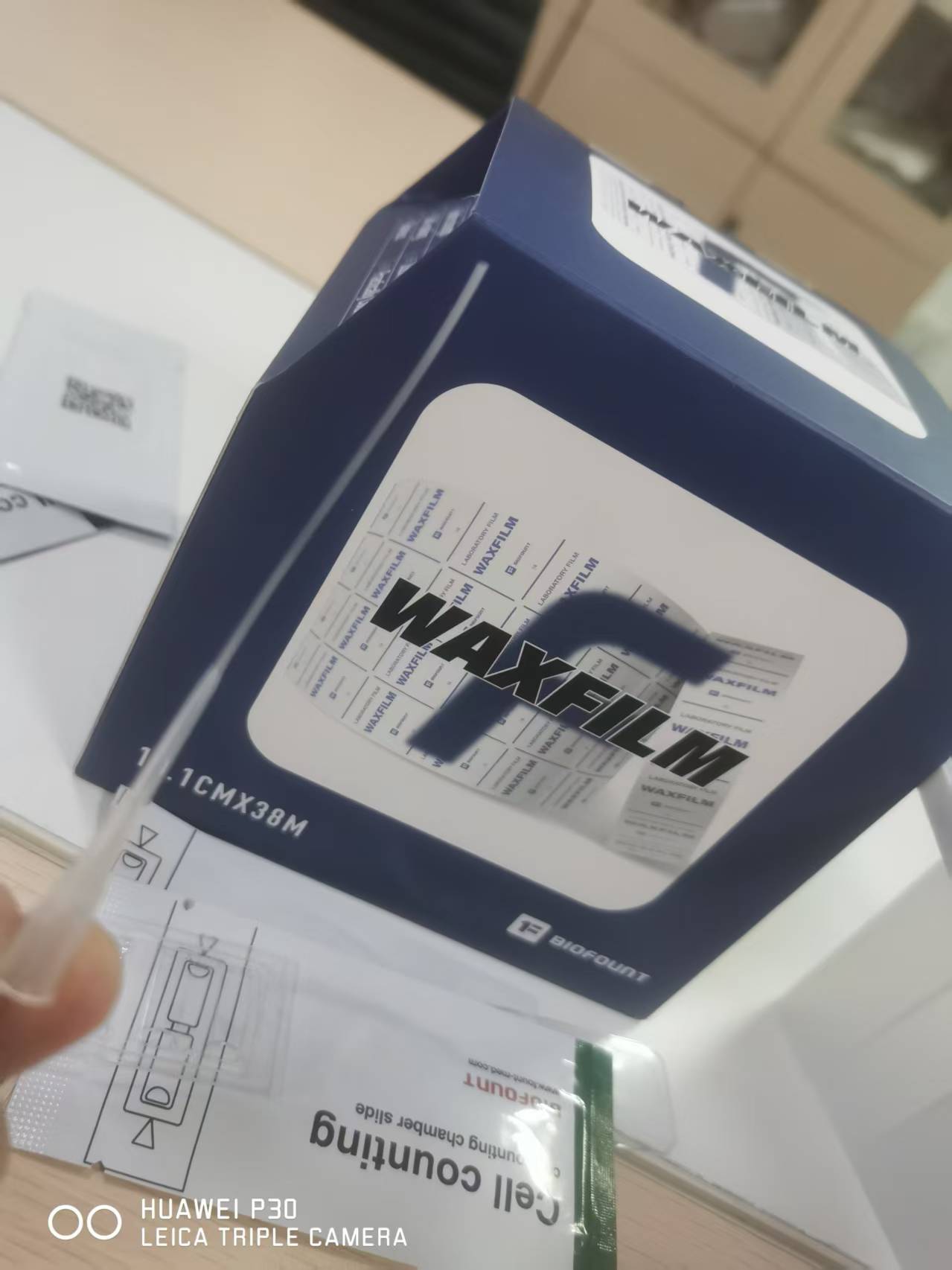
Waxfilm實驗室封口膜的5大突破
Waxfilm實驗室封口膜作為生物功能膜領域的國產技術突破和品牌突破,是生物領域中國技術發展的縮影。
2025/5/6 17:02:07

各種微流控芯片鍵合方法的優缺點
微流控芯片鍵合:目前主要有激光焊接、熱壓鍵合、膠鍵合、超音波焊接,每種方法都有各自的優缺點。本文主要介紹聚酯...
2023/7/28 10:43:09

新一代微流控鍵合解決方案
微流控鍵合解決方案:微流控芯片制造的一個重要環節,也是最容易被忽視的--芯片鍵合。其中一個重要因素是:微流控...
2023/7/27 12:44:28