
 購物車
購物車 
-
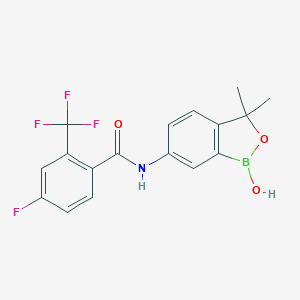
4-氟-N-(1-羥基-3,3-二甲基-1,3-二氫苯并[C][1,2]噁硼戊環(huán)-6-基)-2-(三氟甲基)苯甲酰胺
- names:
Acoziborole
- CAS號:
1266084-51-8
MDL Number: MFCD03990453 - MF(分子式): C17H14BF4NO3 MW(分子量): 367.1
- EINECS:No data available Reaxys Number:506437-71-4
- Pubchem ID:44178354 Brand:BIOFOUNT
| 貨品編碼 | 規(guī)格 | 純度 | 價格 (¥) | 現(xiàn)價(¥) | 特價(¥) | 庫存描述 | 數(shù)量 | 總計 (¥) |
|---|---|---|---|---|---|---|---|---|
| YZM000782-5mg | 5mg | 99.64% | ¥ 9112.00 | ¥ 9112.00 | 2-3天 | ¥ 0.00 | ||
| YZM000782-1mg | 1mg | 99.64% | ¥ 4387.50 | ¥ 4387.50 | 2-3天 | ¥ 0.00 |
| 中文別名 | 4-氟-N-(1-羥基-3,3-二甲基-1,3-二氫苯并[C][1,2]噁硼戊環(huán)-6-基)-2-(三氟甲基)苯甲酰胺(Acoziborole,1266084-51-8);阿哥茲伯勒 |
| 英文別名 | Acoziborole(4-氟-N-(1-羥基-3,3-二甲基-1,3-二氫苯并[C][1,2]噁硼戊環(huán)-6-基)-2-(三氟甲基)苯甲酰胺,1266084-51-8) |
| CAS號 | 1266084-51-8 |
| Inchi | InChI=1S/C17H14BF4NO3/c1-16(2)12-6-4-10(8-14(12)18(25)26-16)23-15(24)11-5-3-9(19)7-13(11)17(20,21)22/h3-8,25H,1-2H3,(H,23,24) |
| InchiKey | PTYGDEXEGLDNAZ-UHFFFAOYSA-N |
| 分子式 Formula | C17H14BF4NO3 |
| 分子量 Molecular Weight | 367.1 |
| 溶解度Solubility | |
| 性狀 | 固體粉末,Power |
| 儲藏條件 Storage conditions | -20°C 3 years年 4°C 2 years年 / In solvent溶液中:-80°C 6 months月 -20°C 1 month月 |
1.實驗前需戴好防護眼鏡,穿戴防護服和口罩,佩戴手套,避免與皮膚接觸。
2.實驗過程中如遇到有毒或者刺激性物質(zhì)及有害物質(zhì)產(chǎn)生,必要時實驗操作需要手套箱內(nèi)完成以免對實驗人員造成傷害
3.實驗后產(chǎn)生的廢棄物需分類存儲,并交于專業(yè)生物廢氣物處理公司處理,以免造成環(huán)境污染Experimental considerations:
1. Wear protective glasses, protective clothing and masks, gloves, and avoid contact with the skin during the experiment.
2. The waste generated after the experiment needs to be stored separately, and handed over to a professional biological waste gas treatment company to avoid environmental pollution.
Tag:4-氟-N-(1-羥基-3,3-二甲基-1,3-二氫苯并[C][1,2]噁硼戊環(huán)-6-基)-2-(三氟甲基)苯甲酰胺MSDS,4-氟-N-(1-羥基-3,3-二甲基-1,3-二氫苯并[C][1,2]噁硼戊環(huán)-6-基)-2-(三氟甲基)苯甲酰胺蒸汽壓,4-氟-N-(1-羥基-3,3-二甲基-1,3-二氫苯并[C][1,2]噁硼戊環(huán)-6-基)-2-(三氟甲基)苯甲酰胺合成,4-氟-N-(1-羥基-3,3-二甲基-1,3-二氫苯并[C][1,2]噁硼戊環(huán)-6-基)-2-(三氟甲基)苯甲酰胺標(biāo)準(zhǔn),4-氟-N-(1-羥基-3,3-二甲基-1,3-二氫苯并[C][1,2]噁硼戊環(huán)-6-基)-2-(三氟甲基)苯甲酰胺應(yīng)用,4-氟-N-(1-羥基-3,3-二甲基-1,3-二氫苯并[C][1,2]噁硼戊環(huán)-6-基)-2-(三氟甲基)苯甲酰胺合成,4-氟-N-(1-羥基-3,3-二甲基-1,3-二氫苯并[C][1,2]噁硼戊環(huán)-6-基)-2-(三氟甲基)苯甲酰胺沸點,4-氟-N-(1-羥基-3,3-二甲基-1,3-二氫苯并[C][1,2]噁硼戊環(huán)-6-基)-2-(三氟甲基)苯甲酰胺閃點,4-氟-N-(1-羥基-3,3-二甲基-1,3-二氫苯并[C][1,2]噁硼戊環(huán)-6-基)-2-(三氟甲基)苯甲酰胺用途,4-氟-N-(1-羥基-3,3-二甲基-1,3-二氫苯并[C][1,2]噁硼戊環(huán)-6-基)-2-(三氟甲基)苯甲酰胺溶解度,4-氟-N-(1-羥基-3,3-二甲基-1,3-二氫苯并[C][1,2]噁硼戊環(huán)-6-基)-2-(三氟甲基)苯甲酰胺價格,4-氟-N-(1-羥基-3,3-二甲基-1,3-二氫苯并[C][1,2]噁硼戊環(huán)-6-基)-2-(三氟甲基)苯甲酰胺作用,4-氟-N-(1-羥基-3,3-二甲基-1,3-二氫苯并[C][1,2]噁硼戊環(huán)-6-基)-2-(三氟甲基)苯甲酰胺結(jié)構(gòu)式,4-氟-N-(1-羥基-3,3-二甲基-1,3-二氫苯并[C][1,2]噁硼戊環(huán)-6-基)-2-(三氟甲基)苯甲酰胺用處,4-氟-N-(1-羥基-3,3-二甲基-1,3-二氫苯并[C][1,2]噁硼戊環(huán)-6-基)-2-(三氟甲基)苯甲酰胺毒理性質(zhì),4-氟-N-(1-羥基-3,3-二甲基-1,3-二氫苯并[C][1,2]噁硼戊環(huán)-6-基)-2-(三氟甲基)苯甲酰胺物理性質(zhì)
| 產(chǎn)品說明 | 4-氟-N-(1-羥基-3,3-二甲基-1,3-二氫苯并[C][1,2]噁硼戊環(huán)-6-基)-2-(三氟甲基)苯甲酰胺(Acoziborole,1266084-51-8)可安全按有效地用于治療人類非洲錐蟲病 (HAT) |
| Introduction | Acoziborole(4-氟-N-(1-羥基-3,3-二甲基-1,3-二氫苯并[C][1,2]噁硼戊環(huán)-6-基)-2-(三氟甲基)苯甲酰胺,1266084-51-8) is an effective, safe and orally active treatment for human african trypanosomiasis (HAT). |
| Application1 | Acoziborole(4-氟-N-(1-羥基-3,3-二甲基-1,3-二氫苯并[C][1,2]噁硼戊環(huán)-6-基)-2-(三氟甲基)苯甲酰胺,1266084-51-8)A trypanocidal agent |
| Application2 | |
| Application3 |
| 警示圖 | |
| 危險性 | warning |
| 危險性警示 | Not available |
| 安全聲明 | H303吞入可能有害+H313皮膚接觸可能有害+H2413吸入可能對身體有害 |
| 安全防護 | P264處理后徹底清洗+P280戴防護手套/穿防護服/戴防護眼罩/戴防護面具+P305如果進入眼睛+P351用水小心沖洗幾分鐘+P338取出隱形眼鏡(如果有)并且易于操作,繼續(xù)沖洗+P337如果眼睛刺激持續(xù)+P2393獲得醫(yī)療建議/護理 |
| 備注 | 實驗過程中防止吸入、食入,做好安全防護 |
| Evaluation of the in vitro trypanocidal activity of methylated flavonoid constituents of Vitex simplicifolia leaves BMC Complementary and Alternative Medicine 2015/PMID: 25886869 |
| Update on human African trypanosomiasis (sleeping sickness) Journal of Neurology 2019/PMID: 31209574 |
| Silver Nanoparticles for Treatment of Neglected Diseases Metal Nanoparticles in Pharma 2017 |
| New T b gambiense strategies potentially cost effective PharmacoEconomics & Outcomes News 2016 |
| From Molecule to Drug Molecular Parasitology 2016 |
Human African Trypanosomiasis (HAT)
Abstract:Human African trypanosomiasis (HAT) found only in sub-Saharan Africa is caused by the parasite Trypanosoma brucei which is transmitted by tsetse flies. Only two subspecies of T.brucei are pathogenic for humans: T.b. gambiense and T.b. rhodesiense. HAT is endemic in 36 sub-Saharan countries, and 98 % of all reported HAT cases are due to T. b. gambiense. Sixty-nine million persons in Africa are at risk of HAT. The number of HAT cases reported globally decreased fivefold in the last decade which has encouraged WHO to set a target to eliminate HAT as a public health problem by the year 2020, aiming for zero transmission by the year 2030. Tsetse flies do not lay eggs, but the female fly deposits a single mature larva in humid soil. The larva pupates and emerges as an adult fly 20–80 days later. A female fly produces only three to five larvae during her lifetime that typically lasts for 3 months, making the intrinsic growth rate of tsetse populations rather low. An infected tsetse fly injects the infective form of the parasites into the mammalian host when it feeds. These parasites undergo, and are able to switch, their antigenic variation of their variant surface glycoprotein (VSG) coat, allowing them to escape the host immune response. This phenomenon of antigenic variation makes the development of an effective vaccine unlikely. The disease affects mainly the lymphoid system, heart, lungs and brain manifesting as intermittent fever, general malaise, severe headache, joint pains and muscle aches, pruritus, urticaria or facial oedema. Lymphadenopathy is common with the classical Winterbottom’s sign. Patients with the meningo-encephalitic stage suffer continuous headaches with poor response to painkillers and show more specific neurological signs of the rather typical sleep disturbances. Diagnosis of HAT is a three-step procedure: (i) screening test to identify HAT suspects, (ii) confirmatory parasitological tests and (iii) staging. Treatment is based on the stage of illness, current options being pentamidine, suramin, melarsoprol, eflornithine and the nifurtimox-eflornithine combination therapy (NECT). Two strategies are used for the reduction or interruption of HAT transmission: elimination of the parasite reservoir and vector control. This last decade has seen several breakthroughs in clinical R&D for HAT, bringing new diagnostics and drugs to patient care, but effective and efficient implementation of these new tools in HAT control and proper treatment of patients will require further research.
- 相關(guān)產(chǎn)品
-
< >
- 推薦產(chǎn)品
-
< >
- 最新產(chǎn)品
-
< >
新聞
胞爬片免疫組化染色.png)
怎么做細(xì)胞爬片免疫組化染色實驗
細(xì)胞爬片免疫組化染色,是通過細(xì)胞爬片是讓玻片浸在細(xì)胞培養(yǎng)基內(nèi),細(xì)胞在玻片上生長,主要用于組織學(xué),免疫組織化學(xué)...
2020/7/20 22:04:33
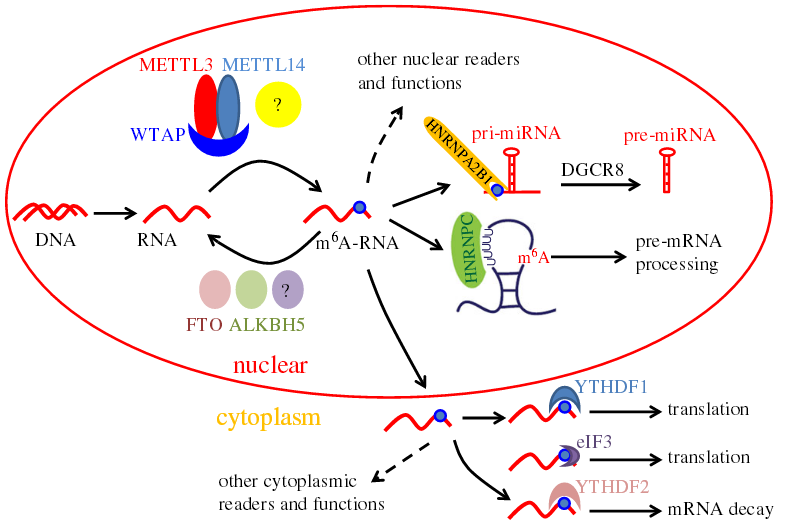
提取病毒RNA的實驗方法
提取病毒RNA方法分別有:異硫氰酸胍的提取病毒RNA方法、TRIzol LS提取法、Trizol法提取法等等...
2020/7/22 20:29:26
胞插件.png)
細(xì)胞培養(yǎng)耗材技術(shù)領(lǐng)先性
細(xì)胞培養(yǎng)板行業(yè)面臨的核心痛點是:常規(guī)TC處理后表面親水角隨時間衰減,影響長期培養(yǎng)穩(wěn)定性,BIOFOUNT高分...
2026/4/28 15:12:51
胞培養(yǎng)板.jpg)
細(xì)胞培養(yǎng)耗材關(guān)鍵性能
細(xì)胞培養(yǎng)板的水接觸角作為表面潤濕性的核心指標(biāo),直接影響細(xì)胞貼壁、增殖、分化及功能表達(dá),其中40°(低接觸角/...
2026/4/28 14:52:44

chelex 100樹脂國產(chǎn)替代之路-BIOFOUNT范德生物
Chelex 100螯合離子交換樹脂對銅、鐵和其他重金屬?的偏好顯著高于對鈉、鉀等一價陽離子的偏好。它對二價...
2025/11/4 14:22:46
9月開學(xué)季——助研新學(xué)期 范德送好禮
2025/8/28 15:30:55
Waxfilm 實驗室封口膜:技術(shù)與國際市場的雙重突破
在實驗室耗材領(lǐng)域,封口膜是保障實驗準(zhǔn)確性與穩(wěn)定性的關(guān)鍵產(chǎn)品之一。近年來,Waxfilm?實驗室封口膜憑借其卓...
2025/5/13 13:03:40
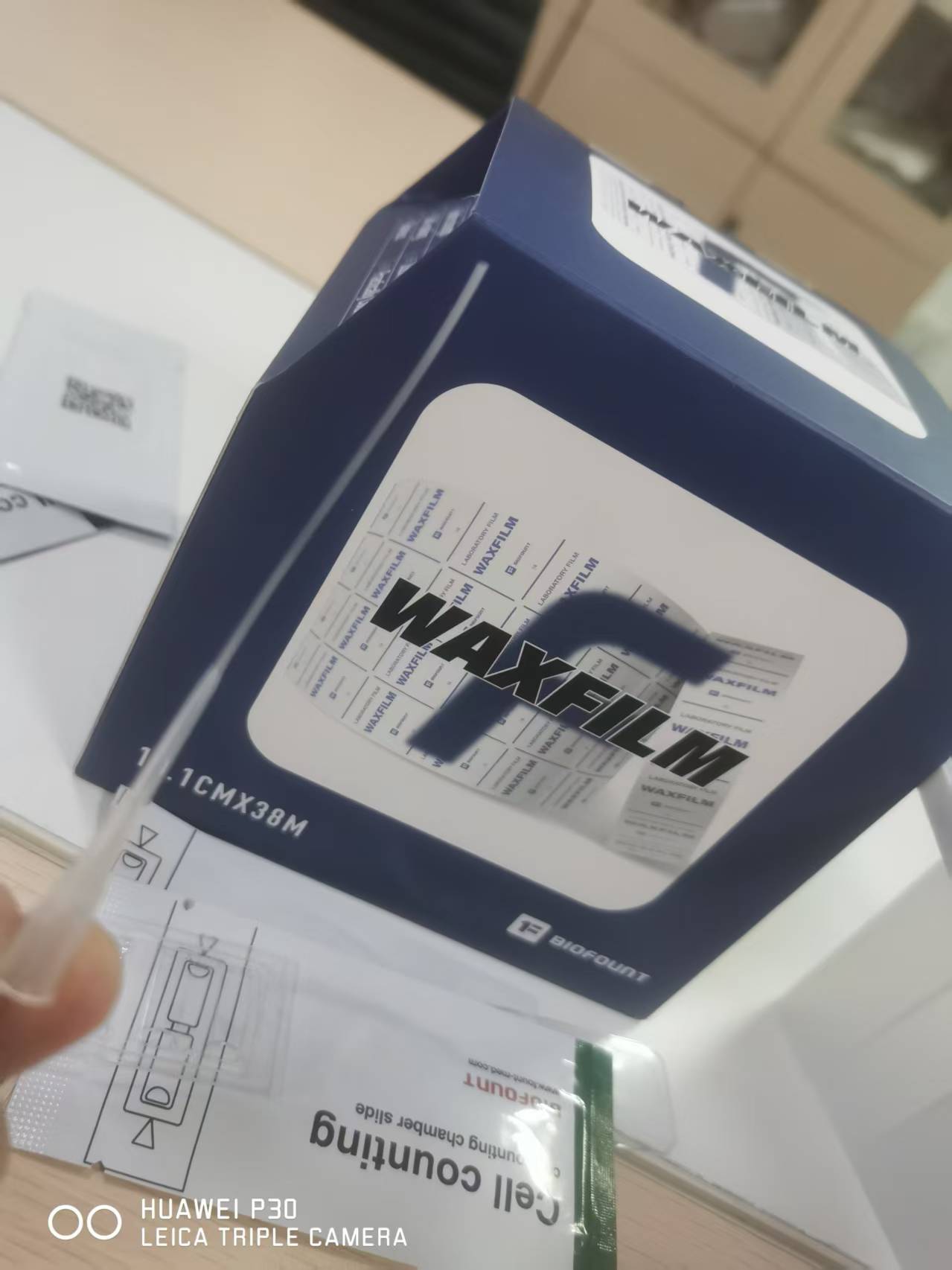
Waxfilm實驗室封口膜的5大突破
Waxfilm實驗室封口膜作為生物功能膜領(lǐng)域的國產(chǎn)技術(shù)突破和品牌突破,是生物領(lǐng)域中國技術(shù)發(fā)展的縮影。
2025/5/6 17:02:07

各種微流控芯片鍵合方法的優(yōu)缺點
微流控芯片鍵合:目前主要有激光焊接、熱壓鍵合、膠鍵合、超音波焊接,每種方法都有各自的優(yōu)缺點。本文主要介紹聚酯...
2023/7/28 10:43:09

新一代微流控鍵合解決方案
微流控鍵合解決方案:微流控芯片制造的一個重要環(huán)節(jié),也是最容易被忽視的--芯片鍵合。其中一個重要因素是:微流控...
2023/7/27 12:44:28